skip to main |
skip to sidebar
 Perhaps Das Testament des Dr. Mabuse (The Testament of Dr. Mabuse) has gotten lost a bit among the likes of Fritz Lang's other (more obviously) historically significant masterpieces such as M or Metropolis, but it in no way deserves less attention. However, it is the best known in a series of Dr. Mabuse films and (along with M) was banned in Nazi Germany due to much of the content making various negative references to the rise of Hitler and the Nazi regime.
The first time I saw it I wasn't expecting much and it really took me by surprise. It excited me throughout in ways Lang's previous film, M, only accomplished at its climax; with a more socially relevant screenplay (then and now) as well as a more intensely original and metaphorically charged use of sound (it was only his SECOND sound film). A fantastic piece of cinema, definitely my favorite of Lang's films (for now).
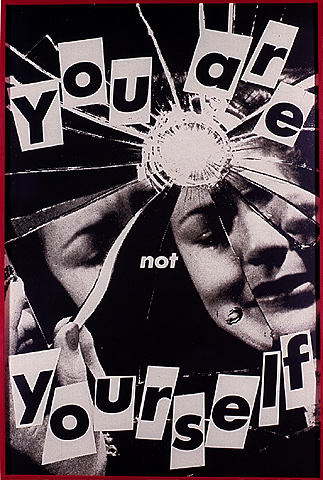
 barbara krugerremember this and you will go far in life
 Diva, Jean-Jacques Beineix's debut film from 1981, regularly seems to come up in conversation between me and a friend of mine, and always with the fondest of memories. We both saw it together in a film and lit. course back in college. Thing is, despite its genius and over-all entertain-ability, we always seem to remember and refer to the most obscure and minimal details from the film. For example, my friend (Ralph's his name) always brings up a particularly interesting apartment-rollerskating Asian teenager and said apartment with its lack of walls and furniture (an ideal place to crash in the idealistic eyes of young college students such as ourselves). The film is just so modern and different the story and its meaning (upon first viewing at least) takes a backseat to Beineix's daring and mesmerizing stylistic choices. Regardless of just how weird Diva is, be sure its definitely a riveting thriller with style to spare and layers upon layers that will provide hours of interesting conversation afterwards. For Beineix, it was quite the hard act to follow. As his IMDB page proves, he never quite reached the heights of his debut and retreated into assistant director obscurity.
Even more sad, I haven't seen Diva in quite a while...
 excess...Into the Wild: Good not great. Very obvious (eye-rollingly, at time) with unnecessary narration and back-story, manipulative close-ups, over-the-top acting, and cheesy dialogue.
 necessity...
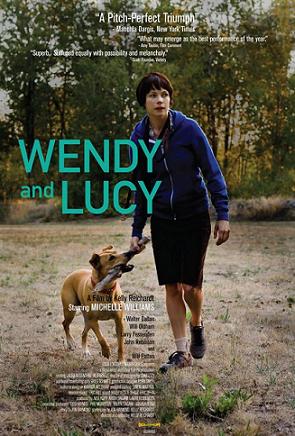
Wendy and Lucy: A better take on a similar story and theme (though with a very different message). A grade-A example of what some are calling Neo-Neo Realism (more on that at later time), this is Sean Penn's indulgent film from two years ago without the self-serving beginning or end; it plops you down in the middle of this woman's predicament, doesn't sugar coat it or glorify it, and trusts you to put together the pieces.
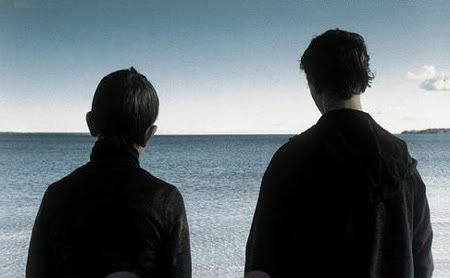
 You wont be able to get this movie out of your head for quite some time after seeing it. Russian writer/director Andrei Zvyagintsev's debut film Vozvrashcheniye (The Return) explores the mixed emotions and layered tension the return of a missing father brings upon two brothers.
A stunning, haunting film with one of the best ending pay-offs I've ever seen, The Return is impossible to categorize with elements from many different genres and more to say than most other films combined. Expect to use your brain for this one because it doesn't tie up the loose ends at the end Hollywood-style, that's your job. The performances are flawless, particularly from the main child actor, and the cinematography is nothing short of (subtle) brilliance. This movie hits your heart like a ton of bricks, half of which you don't even feel until the credits have long since rolled by.
 In an effort to produce something more dependably regular here on art under your nose, I plan on routinely recommending a lesser known film weekly. I'll try my best to give you a good reason why you should waste your time and perhaps money on these fantastic works of cinema, usually by posting a past review I've written of the film.To start off... This week, I was finally able to catch up with Kelly Reichardt's third or fourth film (depending on who's counting) Wendy and Lucy, an amazing little film that really packs a punch. It reminded me of how great Reichardt's previous film was. Released in 2006, Old Joy was in my personal top 10 of films from that year (a year filled with fantastic cinema like Pan's Labyrinth, Children of Men, and Half Nelson). Both films contain similar themes of anti-materialism and alienation presented in very distinct ways that reach you very differently. Both are highly recommended.Below I've included a short review of Old Joy, which I wrote shortly after seeing the film in theaters.Why you should see it:What a deeply touching film this is! A movie about the refreshing nature of our youth, as well as male camaraderie and the eventual separation between friends (and that's just one of its many themes), Kelly Reichardt's Old Joy is one of the most tragic films of the year as well as one of the best. A film that definitely stays with you, with a powerful thought provoking message that's surprising for a film lasting a mere 76 minutes.Such a timely film, Old Joy is the story of two men who at one point were more than friends, overly-close "bonding men" of sorts, but now have grown apart; one of them choosing a more stable/traditional married life (and expecting a child) while the other continuing with the hippy, carefree ways of his youth. As they go on a road trip in search of a more scenic destination, the subtle tension between the two steadily increases leading to more than a couple thought provoking conversations amongst the two friends, as well as a stunning climax of great restraint and depth. Perhaps the film is more geared towards men, but it's themes of separation in a bitter, indifference-promoting world, and later themes of helpless alienation are universal.Now, this is not a movie for everyone! This is a very minimalist, if not flat out slow, film along the lines of Malick or Antonioni. And as with many of those directors' films, most of the audience in my theater was restless throughout, laughing as they left the auditorium in bewilderment. I've said it before and I'll say it again: these people just don't get it! They're too accustomed to today's overly explanatory films that when they're forced to do a bit of the work themselves they're lost and don't know how to "read" the film (movies are a form of literature after all), thus labeling it a boring or pointless exercise. And so the lazy cinema from Hollywood today has once again ruined new and inspired cinema for the masses. . . sigh . . .If you enjoyed last year's masterpiece The New World, or any other such "slow" films, then Old Joy is definitely the 2006 indie release for you.
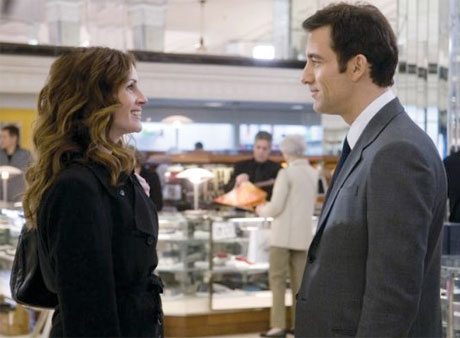
 I recently caught Tony Gilroy's new film (his 2nd) Duplicity (his 1st, Michael Clayton is stunning), starring Julia Roberts and Clive Owen, and it's another case in which I can't for the life of me get it out of my head. Most at first, like myself, would be fooled into thinking it's merely a fun caper-film, a-la the Ocean's series. A throwback to the sexy, fun spy films of the sixties (To Catch a Thief comes to mind). And Gilroy is certainly guilty of fashioning the film in this vein; it's slick and witty style is nothing new, no matter how well it's done. But don't allow the film's flair to distract you. Behind Roberts' glistening teeth and Owen's chiseled jaw-line is a great scathing critique of not only (more obviously) American capitalism and big corporations but also of a far older institution. One that at times is far more transparent and falsely grandiose: marriage.
While Duplicity's main characters are not married, they do claim to love one another exclusively with the same "good intentions" (for the future) and intimate commitments any loving couple would have for one another. The problem is they don't trust each other. Without ruining the ending, to make a long story short... money is the root of nearly all evil. It ruins everything! Including any decent relationship, turning it into a simulacrum of a impossible ideal. Put your trust in money and it will only leave you lost, lonely, and depressed.
Keep this in mind when going into the film (viewing it more as parable then reality) and I guarantee you'll appreciate it alot more.
Normally I wouldn't post something so specifically about myself, but I think this calls for an exception. And normally I wouldn't re-blog something, but seeing as how this one concerns me specifically, I thought it appropriate.There are very few times when I have been more proud of myself. It was a great, nerve-racking (to the point of losing 10 pounds) accomplishment...
http://elegantsips.tumblr.com/post/87730514
[wrote this a while ago but never quite finished it the way I wanted... figured I'd finally just post it anyway] 
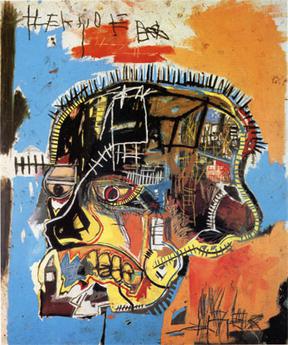
Many artists, from Pollock to Warhol to Basquiat, spoke (perhaps facetiously) of a particular state of mind they got into, a zone, a place where they ceased being artists and taped into something else, something unexplainable and very different. Some argue this is a metaphysical or ethereal place the artist is pulling from, when an artist is no longer thinking of his art nor is he an artist but instead merely a tool for something that already exists (be it somewhere out there in the ether, in a parallel universe, etc.) to be transcribed and communicated for others to look at, ponder, be enlightened by, and enjoy. Their work is "meant" to change the world (at the risk of losing credibility, it's kind of like in that recent mediocre movie by M. Night Shyamalan).
Others think these people are taking crazy pills. And some fall somewhere along the middle.
And so, the question arises (as it did at work, in my case, one inspired afternoon): What do you think? Are these moments of unexplained artistic genius moments in which the planets align and we gain a glimpse into an another universe; are they simply products of a night of drug induced hallucinations; or do these moments fall somewhere in-between, unconsciously grabbed from a collective subconscious otherwise untapped by and hidden from the masses?I, for one, fall somewhere along the middle. I believe we are what we create and vice versa (what we create is a product of who we are). We  may not be aware of it but even when we get lost in something we love (be it art or even another human being) it explains chapters worth of who we are and what we truly care for, live for, and yearn for. Perhaps these artists are taping into something which we might’ve been better aware of earlier during our childhoods, but is now clouded after years of disillusionment as we've grow older and colder.
Pollock and his contemporaries have always been a general point of interest and perennial favorite of mine. No matter how new or daring contemporary art gets I always go back to them.
Now I turn it over to you:
1. Check out the video below (listen, particularly)...
2. Think about the above...
3. Let me know what you think...
"sometimes i lose the painting... "